Circa
Not a dating app. The part after the match.
- Built and shipped solo
- 16 May 2026
- 29 May 2026
- Shipped, now unlisted
Dating apps solve the matching. They stop precisely where the difficulty starts.
After two people agree they want to meet, the next move is a logistics problem wearing a social costume. Where, in what order, how far apart, how long, and what happens if the first place is full. Most of it gets resolved by messaging back and forth until somebody proposes a bar and both people accept out of fatigue.
Circa was built for that gap. Its own product documentation is unusually firm about it: not a dating app, no swiping, no matching, no messaging, and deliberately not filed under Social Networking, on the grounds that the category would claim something the app does not do.
It produced an evening, not a list: a concept, a sequence of real stops, timing, the walk between them, a map, and a quiet backup if the night needed to change.
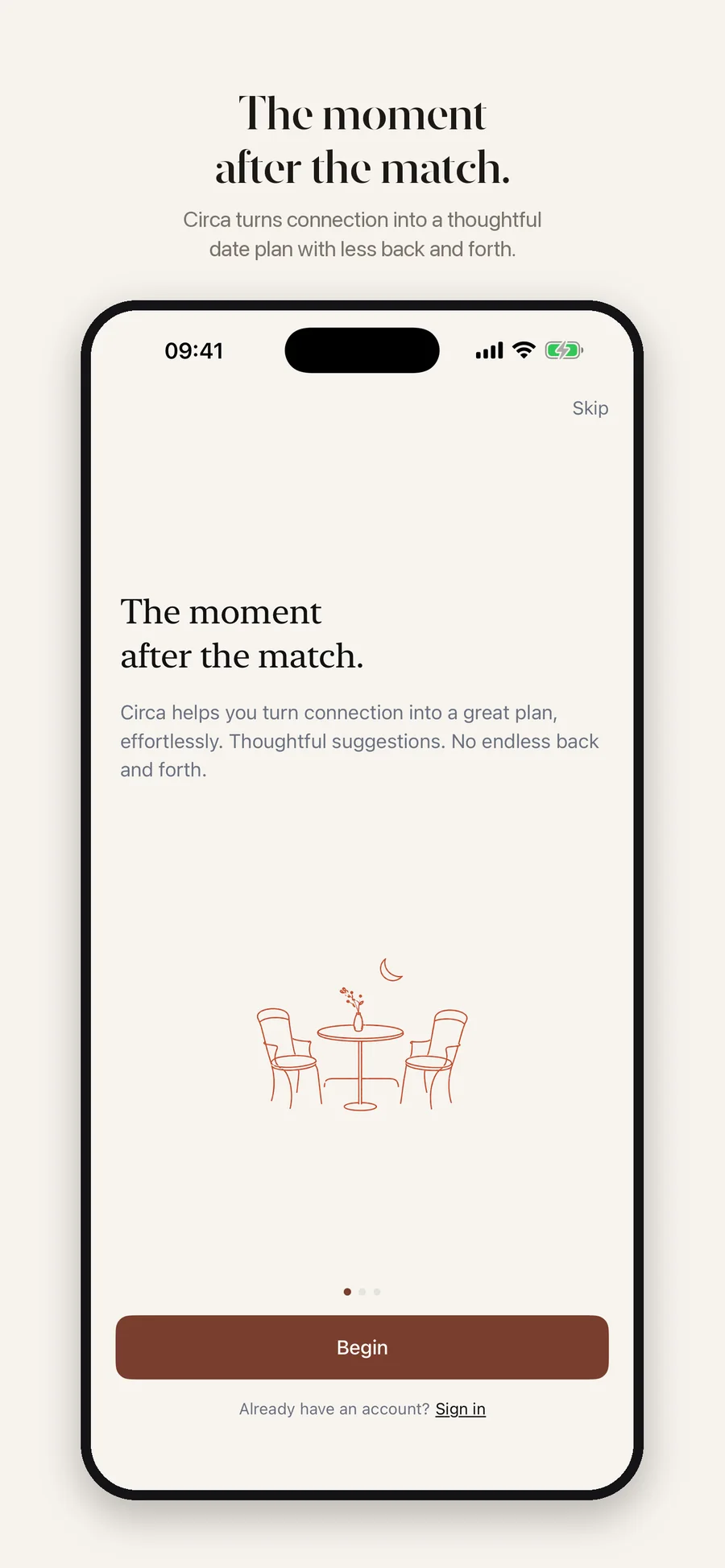
Onboarding: Circa states what it is for before it asks for anything.
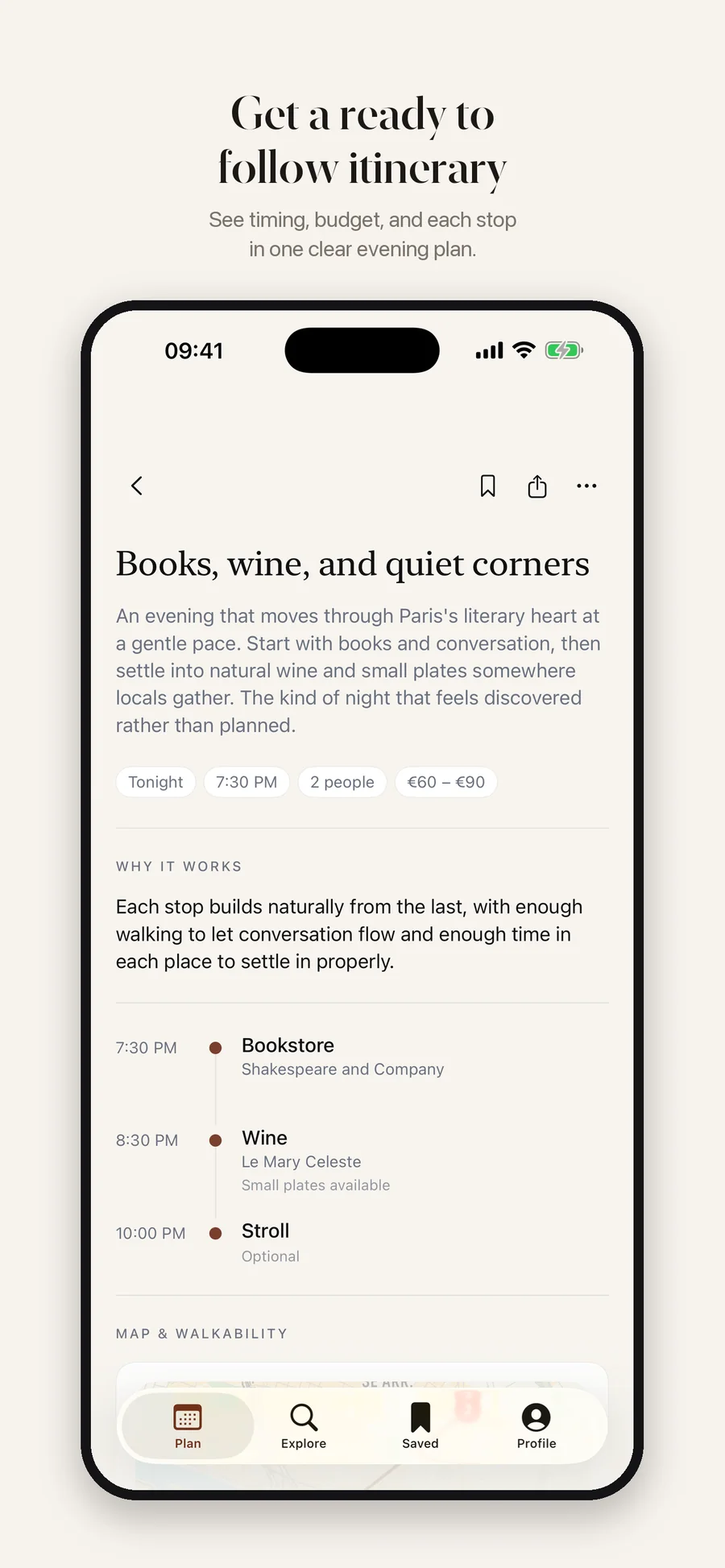
The output is a sequence of real stops with timing, not a list of suggestions.
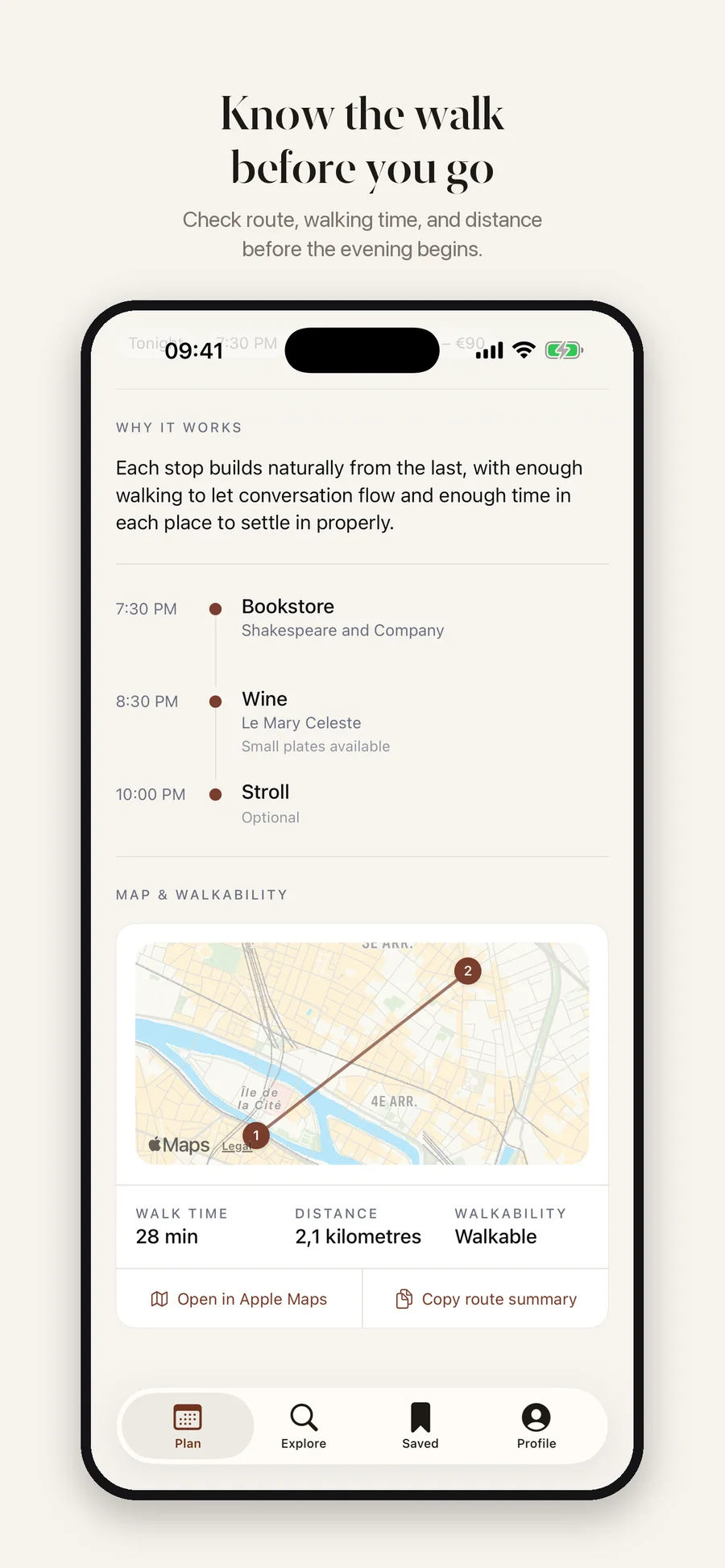
Walking distance between stops, shown before the evening starts.
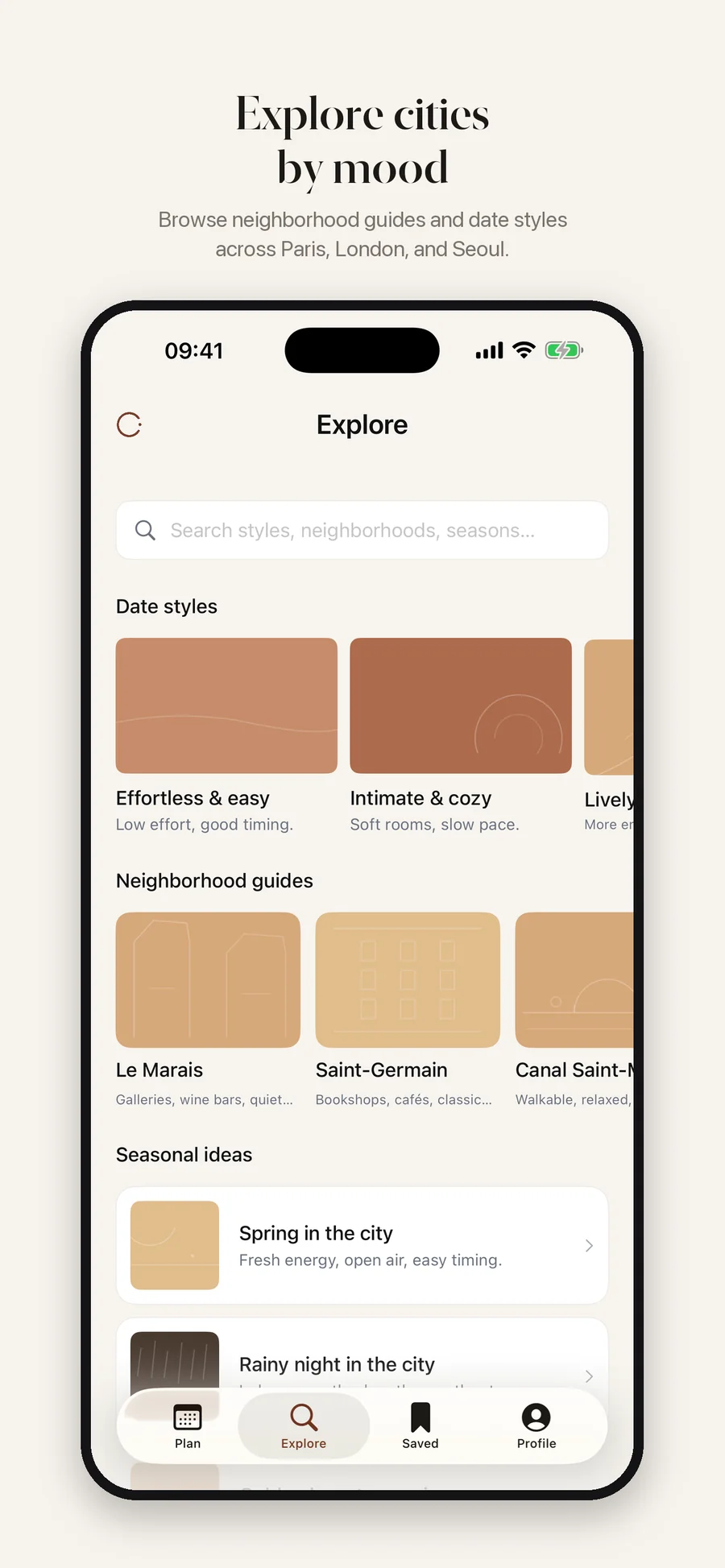
Browsing by feel rather than by category.
The walking figure is the part that gives the rest its meaning. A plan that looks good as a list can be unwalkable in practice, and you only discover that halfway through the evening. Showing the distance before you leave is what separates an itinerary from a set of recommendations.
Thirteen days separate the earliest surviving source from the successful App Store upload.
The first Circa source files are dated 16 May 2026. The upload log records the build accepted on 29 May at 19:58, with a delivery identifier and no errors. Those are the two events that can be dated, so those are the two used.
An older write-up of this project says seventeen days, measured from a “concept lock” after a hackathon. That figure is not repeated here because no dated evidence survives for the starting point it counts from.
Thirteen is not offered as a corrected version of it. It is a different measurement: the reproducible interval between two timestamped artefacts, a development window rather than a concept-to-ship duration. How long the idea existed before the first file, and how long the review took after the upload, are both unknown. Swapping one round number for another would only replace a myth with a smaller myth.
What the speed is actually evidence of is narrower than it sounds. The compressible parts were the ones with known shapes: onboarding, the legal and support pages Apple requires, the store metadata, the build and upload pipeline. What did not compress was deciding what the app refuses to be. The product documentation spends more care ruling things out, no swiping, no matching, no Social Networking category, than on any feature. That judgement is the part that could not be hurried, and it is the reason the thirteen days produced something coherent rather than merely finished.
Forty-seven seconds of the app as it shipped.
Circa reached the App Store, and it is not there now.
It is finished and currently unlisted, taken down so that everything could go into Griotta. That is a choice about attention rather than a verdict on the product: one person cannot properly carry two consumer apps, and pretending otherwise would have degraded both.
withcirca.com is still up and still describes what the app does. As of today it no longer offers a download, because the listing it pointed at returns a 404 and sending people to a dead page is worse than telling them plainly.
Deciding what it is not was the expensive part.
The documentation for this app argues hardest about exclusions. Not a dating app, not a social graph, not the Social Networking category because Apple can reject a build whose category claims what the app does not deliver. Every one of those is a decision that had to be made before anything could be built cleanly.
A plan is only useful if it survives contact with a pavement.
Walkability was treated as a first-class output rather than a detail. It is the difference between a recommendation and a plan, and it is the thing a list of venues can never tell you.
Speed came from the known parts.
Thirteen days is a real number, and it is mostly a statement about which work has a known shape. The store requirements, the legal pages, the build pipeline: all compressible. The product judgement was not, and treating the two as the same thing is how people learn the wrong lesson from a fast launch.
Shipping is not the same as sustaining.
Getting an app onto the App Store solo in under a fortnight turned out to be the easier half. Keeping two consumer products alive at once was the part that did not work, and the honest response was to take one down rather than let both drift.